Know Your Customer, Know Your BaaS Providers: AML Compliance Challenges and Solutions


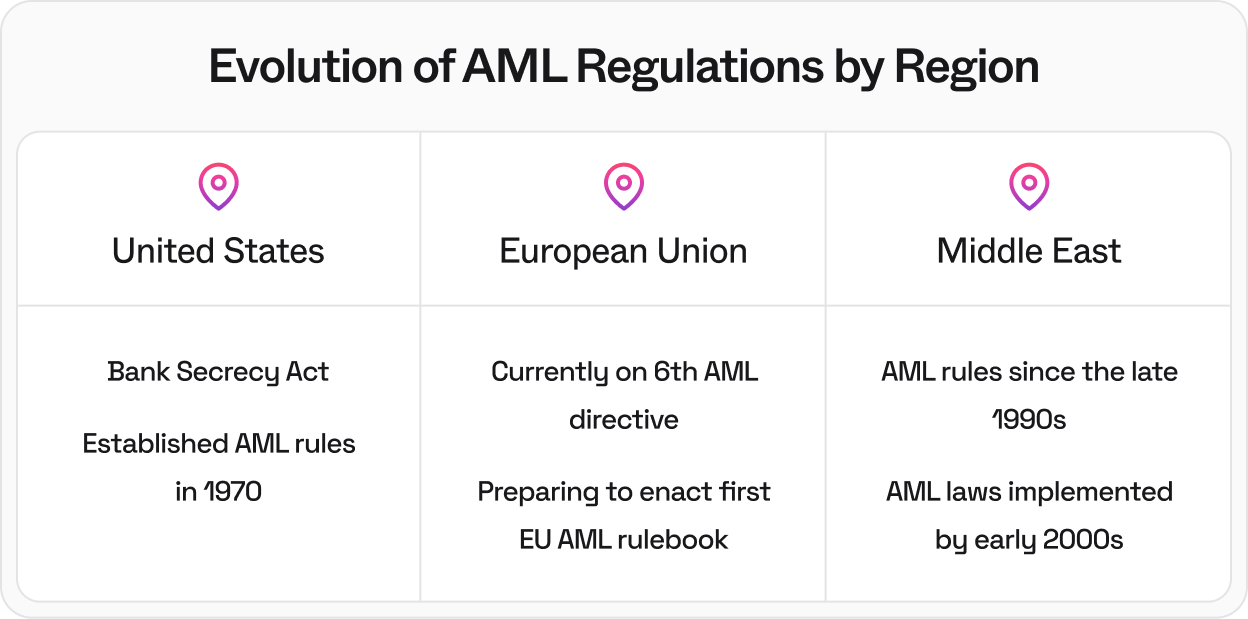
Anti-Money Laundering (AML) compliance would most likely make everyone’s list of the main requirements faced by financial institutions worldwide. AML laws and regulations have definitely been around for a while. In the US, AML rules were first established as part of the Bank Secrecy Act in 1970, whereas the European Union (EU) is currently on its 6th edition of an AML Directive, while preparing to enact a first EU AML Rulebook. In the Middle East, AML rules have been around since the late 1990s with countries in the region having implemented AML laws by the early 2000s.
In theory, AML should be simple, yet it has proven time and again to be one of the most costly regulatory burdens for financial institutions, with waves of fines slapped on entities of all shapes and sizes over the years. The Banking-as-a-Service (BaaS) industry is no exception.
Why AML Compliance is Critical for BaaS Providers
Banking-as-a-Service (BaaS) is transforming financial services, enabling businesses to offer banking products without being licensed themselves. But with big innovation comes big responsibility, and AML compliance is a big part of that. It’s not just about meeting regulations; it’s about protecting your business, your partners, and your customers from the risks of financial crime.
AML compliance isn’t optional—it’s foundational. If you’re operating in the BaaS space, you’re playing in a high-stakes environment where the margins for error are slim. Weak AML controls can lead to hefty fines, regulatory restrictions, and a hit to your reputation that’s hard to recover from.
Challenges BaaS Providers Face in AML Compliance
Banks have had years to perfect their AML processes. As BaaS providers, though, the game is different. You’re not just working with one type of customer; you’re enabling a whole ecosystem of businesses, each with its own unique risks. This diversity is exciting, but it also makes compliance far more complex.
Let’s be real—manual processes can’t keep up with the pace and scale of BaaS. The volume of transactions, the speed at which they happen, and the global nature of the industry make automated, scalable AML systems a necessity.
AML Failures: Lessons from Solaris and Railsr
Even some of the most well-known players in the industry have struggled. Take Solaris, for instance. The European BaaS leader has faced significant challenges from regulators in recent years, who flagged weaknesses in its AML processes. Restrictions on new business have taken their toll, with Solaris standing on the brink of collapse as it sought to close a much-needed fundraising round.
Then there’s Railsr (formerly Railsbank), which faced equally tough times. Its European entity, PayrNet, came under fire in 2023 for AML shortcomings, including inadequate transaction monitoring and customer due diligence. The result? Regulatory restrictions and the eventual loss of PayrNet’s European license—a blow that forced Railsr to scale back operations.
Best Practices for AML Compliance in BaaS
The lessons here are clear: you can’t cut corners on AML, much like in all areas of regulatory compliance. The stakes are too high, and the risks of falling short are too great. So, what’s the solution? Automation and AI are part of the answer.
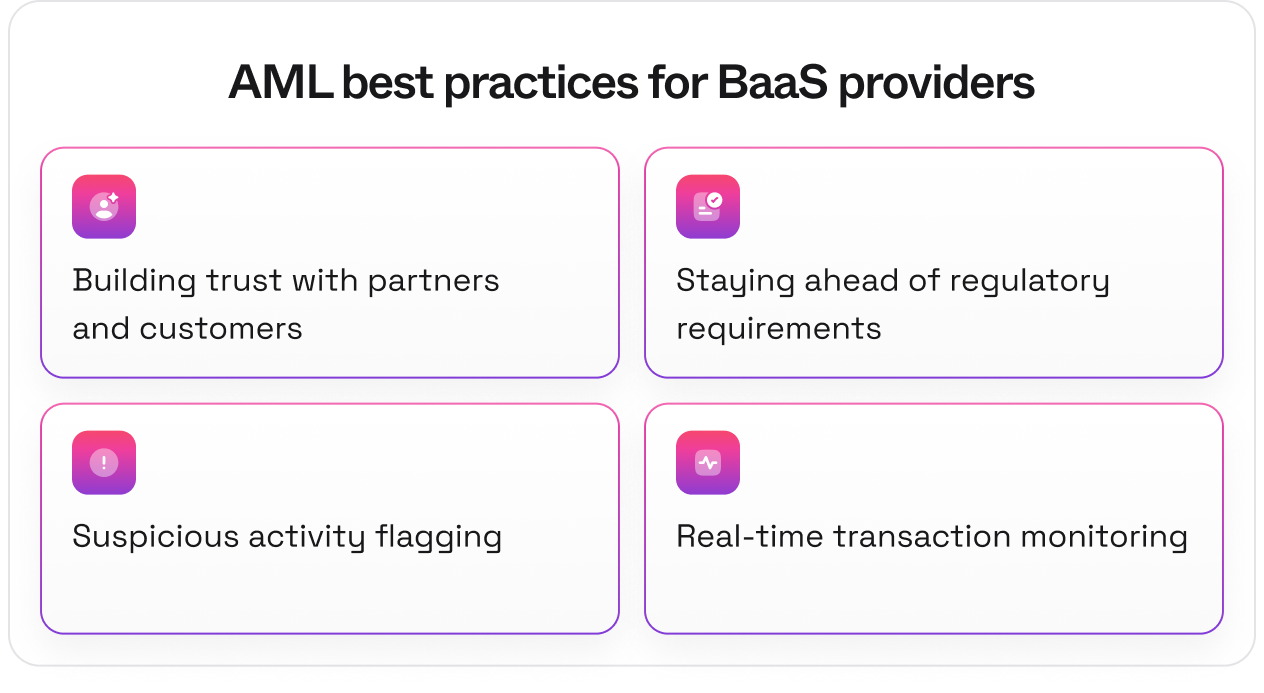
By investing in advanced AML systems, BaaS providers can monitor transactions in real time, flag suspicious activity before it becomes a problem, and stay ahead of regulatory requirements. It’s not just about avoiding fines—it’s about building trust with your partners and customers.
Leveraging Compliance Expertise: Why Banks Have an Edge
While technology can drive efficiency, there’s no substitute for deep compliance expertise—the kind of expertise that traditional banks have built over decades. For banks entering the BaaS market, this expertise is a game-changer.
Unlike newer fintechs, banks are seasoned in risk and regulatory management. They’ve fine-tuned processes for handling KYC (Know Your Customer), AML, and fraud prevention—core areas where compliance is non-negotiable. By pairing this expertise with modern BaaS platforms, banks can maintain full ownership of critical compliance controls while delivering innovative services.
For example, banks can manage account ledgers, oversee transaction monitoring, and conduct customer due diligence, even while leveraging a BaaS partner’s technology. This approach keeps control in the hands of those who understand risk and compliance management best, ensuring no corners are cut.
At Staq, we understand the importance of constantly evolving compliance measures. Our platform integrates with the best AML technologies to ensure that our BaaS partners can monitor and flag suspicious activity in real-time. We help businesses stay one step ahead of regulatory requirements.
Choosing the Right BaaS Partners
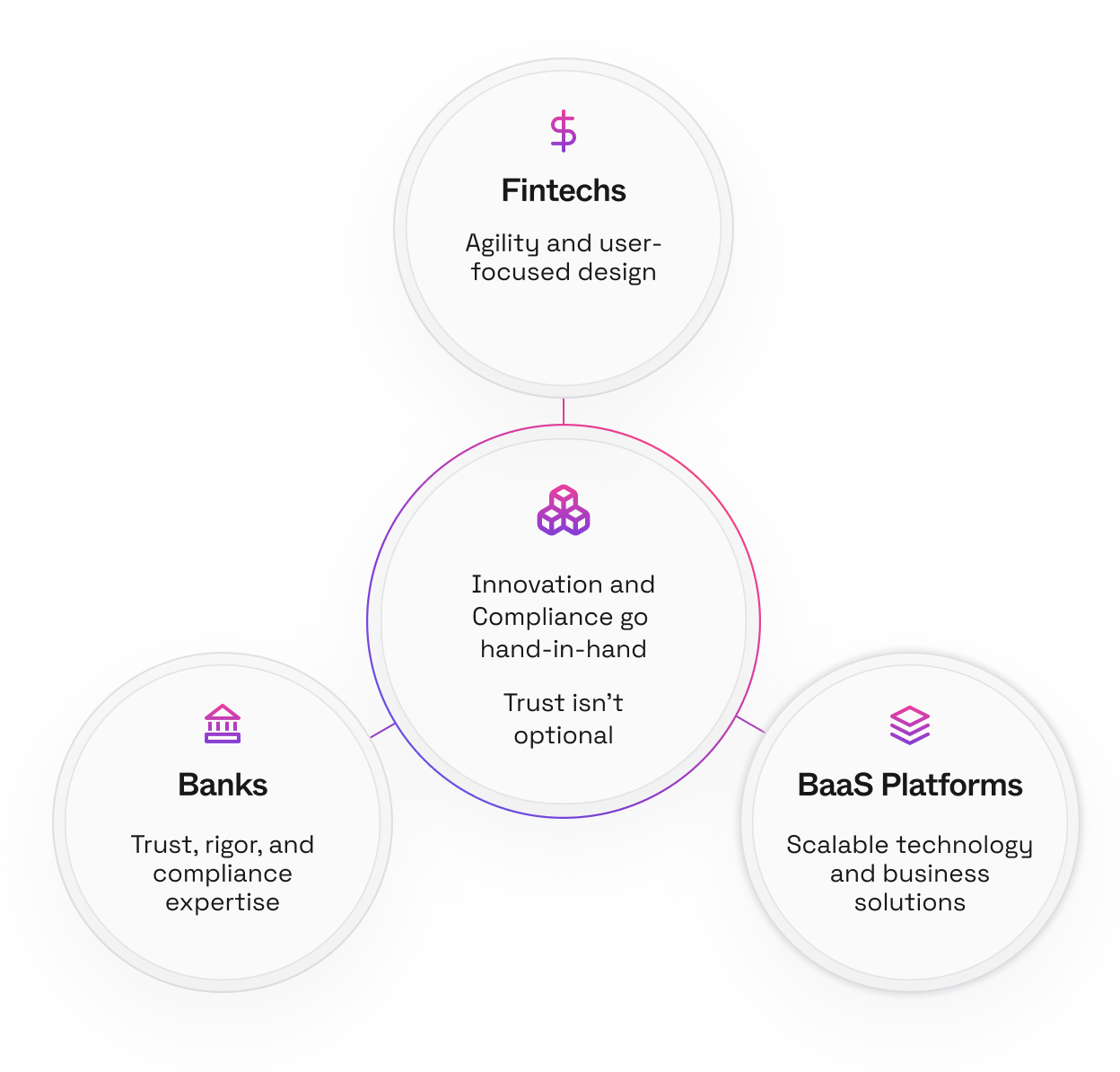
In essence, the best BaaS models combine the strengths of all parties involved. Fintechs bring agility and user-focused design; BaaS platforms such as Staq deliver scalable technology and business solutions; and banks bring the trust, rigor, and expertise that earned them a banking license. Together, they create a system where innovation and compliance go hand in hand—because in the BaaS world, trust isn’t optional.